Author: Editor

How to Drive Safely in Texas Fall Weather

A vehicle travels down a road surrounded by colorful autumn foliage, highlighting tips for safe driving in Texas fall conditions.

Autumn in Texas isn’t just pumpkin spice season. It’s a time when the air feels cooler, the sunsets glow golden-orange, and weekend road trips call your name. But beneath that beauty lies something more unpredictable — Texas weather itself.

Unlike the steady scorch of summer, fall in the Lone Star State is moody. One morning might greet you with fog so thick you can barely see the traffic lights. By noon, it’s sunny and warm. By evening? Sheets of rain pounding the windshield.

These sudden shifts make driving in Texas fall weather uniquely challenging and sometimes downright dangerous.

Wet leaves, slick roads, fog, reduced daylight, and the ever-present threat of hydroplaning all test your patience and reflexes. But with awareness, preparation, and a few mindful habits, you can make your autumn drives much safer. Here are Texas road driving tips you should know about.

Understanding Fall Weather in Texas: Why It’s So Unpredictable

A close-up of a car windshield covered in raindrops, illustrating the challenges of driving in Texas fall weather.Texas is big, really big, and that’s the root of its weather drama.

Cool northern air clashes with warm Gulf moisture, creating sharp temperature drops, sudden storms, and dense fog pockets, often all within the same day.

Add to that early sunsets, wet leaves, and leftover summer oils on the road, and you’ve got a cocktail of hazards that can catch even seasoned drivers off guard.

Being mentally prepared for these shifts is the first step to staying safe.

Texas Road Driving Tips

1. Rain, Leaves & Oil: The Hidden Slippery Traps

Fall brings more than cozy road views. It also brings a perfect storm of slick surfaces.

When rain mixes with fallen leaves and leftover oil residue, Texas roads can become as slippery as ice. Many drivers underestimate this risk. Over 75% of weather-related accidents happen on wet pavement.

Here’s what you should remember:

Hazard What Happens How to Stay Safe
Wet Leaves Act like ice, especially during braking Slow down before curves and avoid hard braking
Oil & Dirt Mix with first rains to form a slick film Drive slowly during first few hours of rain
Hydroplaning Tires lose grip and “float” on water Ease off accelerator, steer straight, avoid sudden braking

It’s also worth noting that wet leaves can hide potholes and lane markings. So, stay alert, reduce your speed, and follow in the tire tracks of cars ahead as those tracks usually have less standing water.

2. Weather Whiplash: Handling Sudden Storms and Fog

In Texas, weather can be unpredictable. You might leave home under blue skies and meet a wall of fog or a thunderstorm just a few miles later.

Before you drive, always check the weather, not just for your city, but along your entire route. Fall thunderstorms and flash floods can pop up out of nowhere.

A few golden rules:

  • Never drive through standing water. Even 6 inches can stall your car, and one foot can sweep it away. Turn around, don’t drown.
  • Foggy roads? Go low-beam. High beams reflect off fog, making visibility worse.
  • Disable cruise control when roads are wet. It can worsen hydroplaning.
  • Find safe shelter during severe storms, not under an overpass. Overpasses can act like wind tunnels during high winds.

Having a weather app with radar helps, but so does old-fashioned preparation. Keep a flashlight, first-aid kit, blanket, snacks, and a half-full gas tank because you never know when you’ll need them.

3. Sun Glare and Shorter Days

A man wearing sunglasses is behind the wheel of a car, highlighting safe driving tips for Texas fall weather.As days grow shorter, glare from the low autumn sun becomes one of fall’s sneakiest hazards.

During your morning and evening commute, the sun often sits perfectly at eye level, right in your line of sight. It’s blinding. And it happens exactly when traffic is heaviest.

Here’s how to fight back:

  • Use polarized sunglasses. They cut horizontal glare bouncing off cars and roads.
  • Keep your windshield spotless inside and out. Dust amplifies glare.
  • Use your sun visors smartly. Adjust them before you hit the blinding stretch.
  • Slow down and give space. If glare makes it hard to see brake lights ahead, increase your following distance.

And as daylight fades earlier, remember: half of all traffic deaths occur at night, even though only a quarter of driving happens then. Keep your headlights clean, aimed, and bright.

4. Night Driving: Fatigue, Glare & Hidden Hazards

By November, most Texans are driving home in darkness. And night driving, especially on wet or foggy roads, can be a recipe for trouble.

If you’re over 50, you may need twice as much light to see as clearly as a 30-year-old.

To drive more safely at night:

  • Check all exterior lights. Headlights, taillights, turn signals, every bulb matters.
  • Clean or replace foggy lenses. Cloudy headlights can cut light output by up to 80%.
  • Dim dashboard lights to reduce windshield reflection.
  • Look slightly to the right of the oncoming headlights to avoid being blinded.
  • Take breaks on long drives. Fatigue sneaks up faster in the dark.

5. Vehicle Check-Up: Your Fall Safety Routine

Open car trunk displaying tools and supplies, highlighting the importance of safety during Texas fall driving conditions.Your car is your first line of defense against fall hazards. With temperatures swinging between warm days and cool nights, a few quick checks can make a world of difference.

  • Tires: Pressure drops 1–2 PSI for every 10°F drop in temperature. Low pressure = less grip.
  • Brakes: Make sure they respond smoothly; slick roads amplify braking distance.
  • Windshield wipers: Replace them if they streak or skip.
  • Battery: Texas heat wears it down; cooler temps expose the weakness.
  • Fluids: Check coolant, brake fluid, and washer fluid with rain repellent.

Here’s a quick maintenance table:

Component Why It Matters Fall Check Tip
Tires Traction & stability Maintain correct PSI and tread depth
Wipers Visibility in storms Replace every 6–12 months
Lights Visibility for all Clean lenses & check alignment
Battery Reliable starts Test if 3+ years old
Coolant Prevent overheating/freezing Ensure 50/50 mix

If in doubt, schedule a seasonal inspection before fall rains set in.

6. Watch for Wildlife and Kids

Fall doesn’t just bring cooler air, it also brings movement.

Deer are more active during mating season, especially around dawn and dusk. And as temperatures cool, kids and pets spend more time outdoors again.

Here’s what to keep in mind:

  • Scan the road edges. Deer rarely travel alone.
  • Brake, don’t swerve. Swerving can cause a worse accident.
  • Slow down near parks, schools, and neighborhoods. Children can dart into the road unexpectedly.
  • Stay extra cautious around Halloween. Excited trick-or-treaters often wear dark costumes.

Your headlights, tires, and brakes, the very things you maintain, will determine how safely you can react when something unpredictable crosses your path.

7. Defensive Driving: The Art of Anticipation

When fall weather turns unpredictable, defensive driving is your best skill set.

Think of it as mindfulness on the road. Staying aware, anticipating others’ mistakes, and keeping enough space to act safely.

  • Increase following distance to 5–6 seconds in rain or fog.
  • Avoid sudden moves. Gentle acceleration and braking prevent skidding.
  • Drive for conditions, not speed limits. Slow down during rain or fog.
  • Stay off cruise control on wet roads.
  • Eliminate distractions. You can’t control the weather, but you can control your focus.

Every second of awareness counts, especially when the weather decides to play tricks.

Emotional Resilience Behind the Wheel: Staying Calm When Things Go Wrong

Morning fog envelops cars driving down a road, highlighting the importance of safe driving in Texas during fall.Even the best drivers can feel that spike of fear when things suddenly go wrong, like when your tires start to skid, the rain becomes deafening, or visibility drops to almost nothing. In those split seconds, what happens inside your mind matters as much as what happens on the road.

Most accidents during bad weather occur not just because of road conditions, but because drivers panic. Panic makes you overcorrect, slam the brakes too hard, or freeze altogether. Emotional resilience is about recognizing that moment of chaos and responding with calm clarity instead of fear.

If your car begins to hydroplane, for example, your instinct might be to brake, but the safer move is to ease off the accelerator and steer gently in the direction you want to go. That kind of decision comes from presence, not panic.

Here are a few simple ways to build that calm behind the wheel:

  • Breathe intentionally. Deep, slow breaths lower your heart rate and clear your thinking, even while driving.
  • Keep your grip gentle, not rigid. A death grip on the wheel actually makes you less responsive. Relaxed hands move more fluidly when adjusting to slippery conditions.
  • Focus on one step at a time. Don’t think about the “what ifs.” Just focus on regaining traction, maintaining distance, or finding a safe place to stop.
  • Practice mental rehearsals. Picture yourself handling a skid, fog, or sudden storm calmly. Mental practice prepares your body for real-life calm reactions.
  • Remember, confidence on the road doesn’t mean fearlessness; it means composure. You can’t control the weather, but you can control your response to it. And often, that’s what keeps you safe until the storm passes.

Emergency Readiness: What Every Texan Driver Should Carry

Texas highways stretch for miles through open plains, deserts, and backroads where cell service can vanish. If your car breaks down during a storm, nightfall, or flash flood, a well-stocked emergency kit can turn a crisis into a manageable wait.

Essentials Why You Need It
Flashlight + extra batteries For night breakdowns or power outages
Jumper cables or a portable jump starter Cold, wet weather drains car batteries faster
Blanket, gloves, and a rain poncho For warmth and protection in sudden cold snaps or storms
Bottled water and non-perishable snacks Hydration and energy if stranded for hours
First-aid kit To treat minor injuries or cuts from roadside repairs
Reflective triangles or flares To stay visible to other drivers in low visibility
Multi-tool or small wrench set For small fixes or battery tightening
Portable phone charger or power bank Stay connected when the car power fails
Emergency contact list on paper Just in case your phone dies or signal drops

A few bonus items Texans should consider: a tire pressure gauge, a compact air compressor, and a map of your region, yes, the paper kind. Floods and downed towers can knock out GPS, and knowing alternate routes could save hours.

Keeping these items in a waterproof container in your trunk or under the seat ensures you’re always ready.

And when that unexpected storm or engine trouble hits, you’ll thank yourself for thinking ahead.

Drive Confidently This Fall With Driving Quest

At Driving Quest, we believe confidence on the road comes from knowledge, calm, and the right training. If you want to hit the road feeling prepared for anything, from Texas storms to slick fall roads, enroll in Driving Quest’s Texas Adult Drivers Ed course today.

This state-approved, online course for adults 18 and older offers a comprehensive 6-hour program that includes the official DPS written exam, helping you take the fast track to earning your driver’s license. Learn at your own pace, master essential safety skills, and drive with confidence, no matter what the Texas weather brings. Contact us today to learn more.

U-Turn Laws in Texas: What New Drivers Need to Know

Yellow directional sign featuring an arrow pointing left, illustrating U-turn regulations for new drivers in Texas.

Mastering the art of making U-turns is an essential maneuver for all drivers that requires a proper understanding of state regulations. Many drivers experience confusion about Texas U-turn laws, which can lead to dangerous situations on the road.

While U-turns are generally legal in Texas and provide a quick way to change direction, they’re also notorious for causing numerous accidents when executed improperly. As a new driver, understanding these laws is essential not only for your safety but also for successfully obtaining your license

Knowledge of U-turn Regulations

A toy car next to a traffic light and a traffic sign, illustrating U-turn laws for new drivers in Texas.Knowledge of U-turn regulations directly promotes road safety by reducing collision risks and clarifying liability in case of accidents. In Texas, specific rules dictate where and how U-turns can be performed legally; for instance, they’re typically only allowed at intersections except where traffic lights are present. Understanding these nuances helps prevent dangerous situations and potential legal issues.

  • Knowledge of U-turn laws is essential for passing the Texas Department of Public Safety (DPS) examination, which requires a minimum 70% score
  • Proper U-turn execution prevents accidents and clarifies liability in collision scenarios
  • Different cities in Texas may have their own U-turn ordinances that supersede state regulations

The Texas DPS establishes and enforces these regulations to ensure that all drivers understand proper U-turn procedures. Their comprehensive testing evaluates your knowledge of these traffic laws, serving as the gateway to responsible driving privileges. For new drivers, especially, this knowledge isn’t just about passing a test; it’s about developing lifelong safe driving habits on Texas roads.

Texas U-Turn Laws Explained

Making a U-turn may seem simple, but in Texas, it comes with specific rules that every driver needs to understand. Many restrictions apply to making a U-turn depending on location, signage, and visibility. Knowing when a U-turn is safe and when it’s prohibited can help drivers avoid accidents, tickets, and costly mistakes. Below is a breakdown of the key regulations you should know.

  • Definition of a U-turn: A U-turn is a driving maneuver where a vehicle makes a 180-degree turn to proceed in the opposite direction. In Texas, this maneuver is generally legal but subject to specific regulations.
  • Where U-turns are permitted: In most Texas jurisdictions, U-turns are allowed when:o   You’re in the far-left lane

    o   You have clear visibility of at least 500 feet in the direction of approaching traffic

    o   There are no signs prohibiting the maneuver

    o   You yield to oncoming traffic and comply with traffic signals

  • Where U-turns are prohibited: U-turns are illegal in Texas when:o   Signs specifically prohibit them

    o   At railroad crossings or fire stations

    o   When visibility is less than 500 feet

    o   On one-way streets

    o   When there isn’t sufficient space to complete the maneuver safely

  • U-turn signage: The Texas Transportation Commission and local authorities can place official traffic control devices that prohibit U-turns at specific intersections. Always watch for “No U-turn” signs, which feature a red circle with a U-turn arrow crossed out.
  • Local ordinance variations: Municipal regulations may differ from state law. For example, in Texas City, U-turns are only permitted at intersections where there is no traffic light present. As a new driver, always research local traffic ordinances for the areas where you’ll be driving.

Safe vs. Illegal U-Turns: DPS Regulations and Examples

A traffic light and street sign displaying U-turn regulations, essential information for new Texas drivers.Understanding when and how to execute a U-turn safely is essential for every Texas driver. The Texas Department of Public Safety (DPS) provides clear guidelines to help drivers navigate these sometimes tricky maneuvers:

DPS Guidelines for Safe U-Turns

The Texas Department of Public Safety outlines specific steps drivers should follow to keep U-turns safe and predictable. These best practices help minimize risks and ensure compliance with state driving laws:

  • Always position your vehicle in the far-left lane before attempting a U-turn
  • Ensure you have a clear view of at least 500 feet in the direction of approaching traffic
  • Yield to all oncoming traffic and pedestrians
  • Comply with all traffic signals and signs
  • Use your turn signal to indicate your intention
  • Be cautious of drivers turning right on red lights if you’re making a U-turn on a green light

Examples of Legal U-Turns

Not every U-turn is against the law. In fact, Texas law clearly identifies situations where the maneuver is safe and permissible. Common examples include:

  • At an intersection without a traffic light where U-turns aren’t prohibited by signage
  • When visibility extends at least 500 feet in the direction of oncoming traffic
  • At designated U-turn lanes, often found in highway medians
  • At Restricted Crossing U-Turn (RCUT) intersections, which are specifically designed for safe U-turns

Examples of Illegal U-Turns

Certain conditions and locations make U-turns unsafe or unlawful. Drivers should avoid the following scenarios, which can lead to tickets or accidents:

  • At intersections where traffic lights are present (in some municipalities)
  • Where signs explicitly prohibit U-turns
  • When visibility is less than 500 feet due to hills, curves, or weather conditions
  • At railroad crossings or near fire stations
  • On one-way streets
  • Across double yellow lines (in most circumstances)

Consequences of Illegal U-Turns

Failing to follow Texas U-turn laws can have more than just financial repercussions. From fines to higher insurance rates, here are the most common outcomes of making an illegal U-turn:

  • Traffic fines range from $75 to $200, depending on the municipality
  • Points added to your driving record, potentially increasing insurance premiums
  • Increased risk of accidents – unsafe U-turns are a common cause of side-impact collisions
  • Possible liability in accidents following the modified comparative fault doctrine in Texas

License Requirements for Making U-Turns in Texas

  • A man in a car takes notes on a clipboard, studying U-Turn laws relevant to new Texas drivers.General License Requirements: All drivers with a valid Texas driver’s license can legally perform U-turns where permitted. However, the type of license you hold may affect when and where you can execute this maneuver.
  • Age-Based Requirements: While you can obtain a provisional certificate at 16, you must wait until 18 for a full Texas driver’s license. Drivers aged 18-24 must complete a mandatory 6-hour Texas Adult Driver Education Course before obtaining a license that permits unrestricted U-turns.
  • Learner’s Permit Restrictions: Drivers with learner’s permits must have a licensed adult (at least 21 years old) in the passenger seat when practicing U-turns. These drivers should focus on mastering the basics of safe U-turns in low-traffic areas before attempting them in busier settings.
  • Provisional License Limitations: Drivers with provisional licenses (ages 16-17) may face additional restrictions on when they can perform U-turns, especially during nighttime hours. Always check local ordinances, as they may have additional restrictions beyond state law.
  • Practice Tips for New Drivers: When practicing U-turns as a new driver, start in empty parking lots or quiet residential streets with wide medians. Always signal your intentions, check for approaching traffic from all directions, and make the turn slowly with full awareness of your vehicle’s turning radius.

As you learn to navigate the road, Driving Quest is here to help you master Texas driving laws, including tricky U-turns. Whether you’re a new driver or need a refresher, our Texas Adult Driving Course is your key to understanding the ins and outs of road safety and legal requirements.

With interactive lessons and a 98% passing rate, you’ll gain the skills and confidence to pass your DPS test and drive safely. Contact us today and start your journey toward driving safely and independently!

FAQs

Q: Can I make a U-turn at any intersection in Texas?
A: No. In most Texas cities, U-turns are only allowed at intersections without traffic lights. However, local ordinances vary, so always check for prohibitory signs before making a U-turn.

Q: If there’s a gap in a double yellow line, can I make a U-turn there?
A: Only if it’s at an intersection where U-turns are permitted and you have clear visibility of at least 500 feet.

Q: How do I handle a Restricted Crossing U-Turn (RCUT) intersection?
A: At an RCUT, first turn right onto the main road, then change lanes to reach the median crossover, follow traffic controls to make your U-turn, and then either turn right at the upcoming cross street or continue straight.

Q: Who has the right-of-way when I’m making a U-turn?
A: You must yield to all oncoming traffic, including vehicles turning right on red. The U-turning vehicle rarely has the right-of-way.

Q: Can I be found at fault if someone hits me while I’m making a legal U-turn?
A: Possibly. Texas follows a modified comparative fault doctrine, meaning liability can be shared. Even if your U-turn was legal, if you didn’t exercise proper caution, you might be partially responsible for the accident

What is the Impact Texas Adult Drivers (ITAD) Course? An Expert Guide

Driving school. Beautiful young woman successfully passed driving school test. She looking sitting in car, looking at camera and holding driving license in hand. Girl with driving license

Getting your driver’s license in Texas is more than checking a box. It’s a milestone. It opens the door to independence, career opportunities, and the freedom to explore the Lone Star State on your own terms. For adults seeking to get behind the wheel, understanding the state’s requirements is key for navigating the licensing process. The Texas Department of Public Safety (DPS) has established specific educational requirements to ensure all new drivers possess the knowledge and skills for safe driving.

The ITAD requirements by age group:

A woman behind the wheel of a car, holding a clipboard, likely engaged in the Impact Texas Adult Drivers Course.

These courses provide the necessary preparation, including the official DPS written exam, and equip new drivers with the skills to drive safely and responsibly. Here’s what you can expect to gain:

  • Legal Compliance: Meeting state requirements for adults 18-24 years old
  • Knowledge Foundation: Understanding Texas traffic laws, road signs, and driving etiquette
  • Safety Preparation: Learning defensive driving techniques that can prevent accidents
  • Confidence Building: Gaining skills in a structured environment before taking the road test
  • Financial Benefits: Potential insurance discounts after completing recognized courses

After completing the six-hour course, students must also take the one-hour Impact Texas Adult Driver (ITAD) program focused on the dangers of distracted driving. Together, these educational components ensure that adult drivers are fully prepared for the responsibilities of operating a vehicle on Texas roads.

The Impact Texas Adult Driver (ITAD) Program

A woman is seated in the driver's seat of a car, emphasizing the importance of driver education and safety.

The Impact Texas Adult Driver (ITAD) program is a mandatory online video course developed by the Texas Department of Public Safety (DPS) to promote awareness and safe driving habits. This free, one-hour program is required for all adults aged 18–24 before taking their driving skills exam in Texas. ITAD is divided into three engaging video segments that use factual evidence, state-specific statistics, and powerful real-life stories to show the devastating consequences of distracted driving.

The program’s central message is clear: “It is not about bad people doing bad things, but about good people making poor choices.” These poor choices often involve texting, checking notifications, or attempting to multitask while driving, behaviors that can have life-altering consequences. By presenting real-life examples of crashes and injuries, ITAD helps new drivers understand the responsibility they take on every time they get behind the wheel.

Why ITAD Matters

Completing ITAD ensures that drivers are legally compliant and better equipped to make safe decisions on the road. The program encourages drivers to recognize distracted driving behaviors and commit to focusing fully on driving, which reduces crash risks and builds confidence.

Upon completion, students receive a certificate that must be presented at the DPS driving skills exam. Keep in mind that this certificate is only valid for 90 days, so scheduling the road test within that window is important.

Key Components of the Texas Adult Drivers Course

A woman engages with a laptop covered in icons, while exploring the Impact Texas Adult Drivers Course information.

It is fundamental for anyone pursuing a license to understand the Texas Adult Driving Course. This structured program has been designed to create safer, more knowledgeable drivers across the state. Let’s examine the fundamental components of this important educational requirement.

  1. Eligibility Requirements: Required for adults aged 18-24. Adults 25 and older may take the course voluntarily to gain knowledge and prepare for the written exam online.
  2. Course Content: Covers core driving knowledge, including Texas traffic laws, road signs, safe driving techniques, right-of-way rules, and alcohol and drug awareness. The curriculum prepares drivers for real-world situations and the DPS written examination.
  3.  Format and Duration: Six-hour online course with interactive videos, audio explanations, and quizzes. Students have 45 days to complete it at their own pace.
  4. Preparation for Testing: Includes the official DPS written exam, consisting of 40 multiple-choice questions covering Texas road laws, traffic signs, and driving safety. After passing, students receive an electronic certificate, which must be presented at the DPS. Completion of the Impact Texas Adult Drivers (ITAD) program is required before taking the driving skills test.

Benefits of Completing the Course: Beyond the License

Completing a Texas Adult Drivers Course makes for safer, more confident drivers who contribute positively to Texas roads:

  • Improved knowledge: Thorough understanding of Texas traffic laws and road signs for confident navigation.
  • Confidence and competence:  Builds self-assurance through step-by-step progress in a supportive environment.
  • Insurance and legal benefits: Many insurance companies offer premium reductions for course completion.
  • Safer roads: Defensive driving techniques help anticipate hazards and respond effectively to emergencies.

With these benefits, adult drivers gain the skills to maintain safe driving habits throughout their lives.

Mastering the Road with Confidence

A man and woman seated in the front of a car, both focused on the road ahead, representing safe driving practices.

The Texas Adult Drivers Course is more than a step toward a license. It’s preparation for a lifetime of safe driving. Paired with ITAD, the course reinforces the importance of consistently making good choices behind the wheel. Together, they provide comprehensive education in:

  • Comprehensive Preparation: Equips drivers with knowledge of Texas traffic laws and safety practices
  • Confidence Building: Develops the skills needed to handle various driving situations
  • Safety Focus: Emphasizes defensive driving techniques that prevent accidents
  • Lifelong Impact: Establishes responsible habits that contribute to safer Texas roads

A driver’s license truly is “a ticket to freedom, opportunity, and adventure”. The Texas Adult Drivers Course ensures that this freedom comes with the responsibility and knowledge needed to make Texas roads safer for everyone. By fostering educated, confident, and safety-conscious drivers, the course contributes significantly to creating a culture of responsible driving throughout the state.

If you want to hit the road with confidence, enroll in Driving Quest’s Texas Adult Drivers Ed course today and take the fast track to obtaining your driver’s license. Our state-approved, online course is designed for adults 18 and older, offering a comprehensive 6-hour program that includes the official DPS written exam.

With a 98% passing rate, interactive content, and the convenience of completing the course at your own pace, you’ll be on your way to driving independence in no time. Don’t wait any longer to unlock new opportunities. Start your journey with Driving Quest. Contact us now!

How to Check and Understand Your Texas Driving Record: Essential Tips

A woman holds up her Texas driver's license, symbolizing essential tips for managing a driving record effectively.

Your Texas driving record is an official document that provides a comprehensive overview of your driving history. It serves as your driving fingerprint, containing all the information that various entities use to make important decisions about you as a driver. Insurance companies scrutinize this record when calculating your premium rates, while employers may review it when considering you for positions that involve driving. Courts also reference this document when processing traffic violations or determining eligibility for defensive driving courses.

  • A Texas driving record includes vital information such as your driver’s license status, points accumulated, traffic accidents, violations, convictions, fines, and any DUI/DWI records.
  • Insurance companies rely heavily on your driving record to assess risk and determine your auto insurance rates. A clean record typically results in lower premiums, while violations can significantly increase your costs.
  • Inaccuracies on your driving record can lead to unfairly high insurance premiums, potential legal complications, or even issues with license renewal. These errors might go unnoticed until they cause problems.
  • Experts recommend checking your Texas driving record at least once annually to verify its accuracy and address any discrepancies promptly. This simple practice can save you time, money, and stress during license renewals or when handling traffic violations.

How to Access and Order Your Texas Driving Record

A man working on his laptop at a desk, focused on tasks related to Texas driving record tips and tricks.

Accessing your Texas driving record is a straightforward process with multiple options available. The most convenient method is ordering online through the official Texas Department of Public Safety (DPS) website, which provides immediate access to your information. Third-party providers also offer this service, often with faster processing and additional features like password-protected PDF delivery.

  • To order online through the DPS, you’ll need your driver’s license number, audit number (found on your license), date of birth, last 4 digits of your Social Security Number, and a valid credit card.
  • Several record types are available, each serving different purposes. The most commonly requested is the Certified Type 3A ($10), which most Texas courts require for defensive driving courses and to dismiss tickets.
  • Other options include Type 1 status records ($4), Type 2 three-year histories ($6), and the comprehensive Type AR with complete history ($20).
  • If you prefer not to order online, mail-in requests are accepted; however, processing typically takes three weeks.

Whether you need your record for insurance verification, court requirements, or personal knowledge, online ordering provides the fastest access to this essential information.

Tips for Keeping Your Driving Record Clean

A wooden table with various toy cars and traffic signs, representing essential driving tips and tricks for Texas drivers.

Maintaining a clean driving record in Texas is about avoiding tickets and protecting your finances and driving privileges. A few points on your record can increase insurance premiums by up to 25% and potentially lead to license suspension if they accumulate. The following are proactive steps you can take to keep your record spotless:

  • Practice defensive driving techniques by anticipating potential hazards, maintaining safe distances, and staying focused on the road. This preventative approach helps you avoid violations before they happen.
  • Consider a defensive driving course if you receive a minor traffic ticket. Texas law allows you to dismiss one ticket every 12 months by completing a state-approved defensive driving course, preventing points from appearing on your record.
  • Understand the limitations of ticket dismissal through defensive driving. You’re only eligible if you have a valid Texas license, have not exceeded the speed limit by 25+ MPH, haven’t committed a serious offense, and haven’t used this option in the past year.
  • Keep your Certified Type 3A driving record accessible. This is the only record type courts accept for defensive driving courses.
  • Monitor your record regularly to catch and dispute any errors. Experts recommend checking your driving record at least once per year to ensure its accuracy.

Leveraging Your Driving Record: Savings, Safety, and Opportunities

A young man in the driver's seat of a car, reviewing tips for maintaining a Texas Driving Record.

A clean Texas driving record is a legal formality and a valuable asset that can open doors to financial savings and career opportunities. By maintaining a spotless record and regularly verifying its accuracy, you position yourself for numerous advantages in both your personal and professional life.

  • Insurance companies heavily weigh driving history when calculating premiums. A clean record without violations or accidents can result in significantly lower rates, sometimes by as much as 25% compared to drivers with infractions. This translates to substantial savings over your driving lifetime.
  • Many insurance providers offer additional discounts to drivers who complete state-approved defensive driving or driver education courses. Even if you don’t have a ticket to dismiss, voluntarily taking these courses can lead to premium reductions while refreshing your knowledge of road safety.
  • Employers, particularly in transportation, delivery, sales, and service industries, often review applicants’ driving records before making hiring decisions. A clean record demonstrates responsibility and reliability, qualities valued across all professional fields.
  • Proactively managing your driving record through regular checks and investing in driver education, such as DrivingQuest’s affordable online courses, helps maintain compliance with Texas laws while building confidence behind the wheel.

By viewing your driving record as an investment rather than just a document, you create a pathway to reduced insurance costs, expanded job opportunities, and the peace of mind that comes with being a responsible, educated Texas driver.

Whether you’re a first-time driver or looking to refresh your skills, Driving Quest has the perfect solution for you. Our state-approved Adult Driver’s Ed course is designed to make the process of obtaining your Texas driver’s license smooth and stress-free. With interactive online courses available 24/7, you can learn at your own pace and even take the official DPS written exam online. Enroll now and take the first step towards driving independence! Start your journey with Driving Quest today!

Essential Car Maintenance Tips Every Texas Teen Driver Should Know

Open car trunk displaying various tools and items, emphasizing key maintenance tips for Texas teen drivers.

Earning a driver’s license in Texas is an exciting milestone. It represents freedom, independence, and countless new opportunities. However, driving also comes with serious responsibilities — responsibilities not only for safe driving practices but also for keeping the vehicle itself in reliable condition.

Texas driving conditions can be unforgiving. The state’s scorching summers often push temperatures well above 100°F, while sudden thunderstorms can reduce visibility to almost zero. Rural highways may stretch for miles without a service station, and dust or debris can be a daily challenge on unpaved roads. A car that isn’t properly maintained can quickly become unsafe or leave a driver stranded in dangerous situations.

Car maintenance for teens, therefore, is not just about avoiding costly repairs. It is about safety, confidence, and long-term responsibility. By developing good habits early, teen drivers in Texas can make sure that their vehicles stay road-ready under any conditions.

Car Maintenance Tips for Texas Teens

A book titled "Essential Car Maintenance Tips" rests on a car seat, aimed at Texas teen drivers.

1. Understanding the Owner’s Manual

Every vehicle comes with an owner’s manual, yet it is one of the most overlooked resources. This guide contains information specific to each model and should be the first stop for any new driver in driver education who is learning about maintenance.

The manual explains:

  • Recommended service intervals for oil changes, tire rotations, filter replacements, and more.
  • Meanings of dashboard warning lights, many of which indicate issues that require immediate attention.
  • Fluid specifications, including the type of oil or coolant suited for different climates, are critical in Texas heat.
  • Emergency procedures such as jump-starting, replacing fuses, or resetting tire pressure monitoring systems.
  • For teen drivers, keeping a digital version of the manual on a smartphone is practical, ensuring quick access during emergencies.

2. Oil and Fluids: Protecting the Engine

Oil changes are the single most important maintenance task. Engine oil lubricates moving parts, reduces friction, prevents overheating, and carries away contaminants. In Texas, the extreme heat accelerates oil breakdown, making timely changes even more critical.

  • Change frequency: Most cars require an oil change every 5,000–7,500 miles. Some vehicles allow up to 10,000 miles, but always check the manual.
  • Cost vs. risk: A routine oil change may cost $40–$75, while engine failure from neglect can run $3,000–$7,000.
  • Additional fluids: In addition to oil, transmission fluid, coolant, power steering fluid, and windshield washer fluid all need regular attention. Texas heat accelerates evaporation and breakdown of many fluids, so frequent checks are advised.

Routine fluid checks prevent overheating, breakdowns, and unnecessary wear.

3. Tires: Safety Starts with Traction

Tires are a vehicle’s only contact point with the road, and their condition directly impacts handling, braking, and safety. Poor tire care is one of the leading contributors to accidents, particularly during wet weather.

  • Check tire pressure monthly. Proper inflation improves fuel economy, extends tire life, and enhances safety. Temperature fluctuations in Texas can cause rapid pressure loss.
  • Monitor tread depth. Bald tires increase the risk of hydroplaning on wet roads. The penny test is a quick indicator; if Lincoln’s head is visible, replacement is necessary.
  • Rotate and align tires. Rotating tires every 5,000–7,000 miles ensures even wear. Alignment checks prevent uneven tread wear and improve handling.
  • Spare tire condition. A functional spare is often overlooked. A flat spare provides no help during an emergency.

Well-maintained tires reduce accident risks, particularly on Texas highways where sudden rain or dust storms can make roads slippery.

4. Brake Systems: The First Line of Defense

Individual adding oil to a car engine, highlighting key maintenance tips for teen drivers in Texas.

Brakes are critical for safety. In Texas, where highways often have high-speed traffic and sudden stops are common, functioning brakes can mean the difference between a safe stop and a serious collision.

Warning signs of brake trouble include:

  • Squealing, grinding, or scraping noises when braking
  • Increased stopping distance
  • Pulsations or vibrations in the steering wheel
  • The car pulling to one side when braking
  • Brake warning lights on the dashboard

Brake pads typically need replacing every 25,000–70,000 miles, depending on driving style and road conditions. Annual inspections by a qualified technician are strongly recommended.

5. Battery Maintenance: Power in Extreme Conditions

Car batteries are especially vulnerable in Texas. Intense summer heat speeds up internal chemical reactions, shortening lifespan.

  • Average lifespan: 3–4 years in Texas, compared to 5+ years in cooler regions.
  • Signs of weakening batteries: Dim headlights, slow cranking, dashboard warnings, or electrical malfunctions.
  • Preventive care: Clean corrosion from terminals and ensure tight cable connections.
  • Testing: Free battery testing is available at most auto parts stores and should be done before the summer and winter seasons.
  • Preparedness: Jumper cables or a portable battery booster should always be carried, especially when driving in remote areas.

6. Windshield Wipers and Visibility

A man uses a windshield wiper to clean a car's glass, highlighting important maintenance tips for Texas teen drivers.

Clear visibility is vital for safe driving. Texas thunderstorms, dust storms, and insect buildup can reduce visibility almost instantly.

  • Replace wipers every 6–12 months. UV rays from the Texas sun degrade rubber even when wipers are not in use.
  • Watch for streaking, squeaking, or missed areas. These are indicators of worn blades.
  • Maintain washer fluid levels. Insects and dust accumulate quickly on windshields and require proper fluid for cleaning.
  • Clean both sides of the windshield. Interior glare buildup is a common but overlooked hazard.

Reliable wipers can be the difference between safely navigating a storm and being blinded by rain.

7. Lighting and Signals: Communication on the Road

Vehicle lighting systems are essential for visibility and communication. Properly functioning lights allow a teen driver to see hazards and ensure that other drivers understand vehicle movements.

  • Monthly checks: Headlights, taillights, brake lights, hazard lights, and turn signals should all be tested.
  • Clean lenses regularly. Dust and grime can reduce brightness by up to 50%.
  • Replace faulty bulbs promptly. Driving with non-functional lights is unsafe and illegal.
  • Know how to use hazard lights. Quick activation is crucial during sudden weather changes or breakdowns.

On dark rural highways in Texas, good lighting is a critical safety feature.

8. Emergency Preparedness: Roadside Kits

Car dashboard featuring gauges and a speedometer, emphasizing key maintenance advice for Texas teen drivers.

Even well-maintained cars may break down. A roadside kit can transform an inconvenient delay into a manageable situation.

Essential items include:

  • Jumper cables or a portable battery booster
  • Tire inflator, sealant, and pressure gauge
  • Flashlight with extra batteries
  • First aid kit
  • Reflective triangles or flares
  • Bottled water and non-perishable snacks
  • Blanket or rain poncho (seasonal)
  • Phone charger or power bank

Drivers in different regions of Texas may customize their kits:

  • West Texas: extra water and sunscreen for desert conditions
  • North Texas: blankets, ice scrapers, and small shovels for winter
  • Gulf Coast: rain ponchos and towels for heavy storms

9. Building Long-Term Maintenance Habits

Vehicle maintenance becomes second nature when integrated into a routine.

  • Quick checks at gas stations: Glance at tires and fluid levels when refueling.
  • Regular attention to dashboard warnings: Ignoring alerts often results in costly repairs.
  • Record keeping: A simple maintenance log or app helps track oil changes, tire rotations, and repairs.
  • Learning mindset: Parents, mechanics, and online tutorials provide valuable guidance.

Forming good habits early builds responsibility and confidence, preparing teen drivers for a lifetime of safe driving.

Task Frequency Why It Matters
Check tire pressure Monthly (more often in temperature swings) Prevents blowouts and improves handling in extreme heat and storms
Inspect tire tread Monthly Reduces the risk of hydroplaning during heavy rain
Check oil level Every fuel stop Heat accelerates oil consumption
Oil change 5,000–7,500 miles (or per manual) Prevents engine wear in high-heat conditions
Check coolant, brake, and washer fluid Monthly Essential for safe operation in heat and sudden storms
Brake inspection Annually or if warning signs appear Prevents accidents in high-speed, stop-and-go traffic
Battery test Every 6 months Texas heat shortens battery life significantly
Replace windshield wipers Every 6–12 months UV exposure quickly degrades rubber
Check all lights and signals Monthly Ensures visibility and communication on rural/dark roads
Clean windshield (inside & outside) Weekly Reduces glare during sunrise/sunset
Emergency kit inspection Quarterly Keeps supplies fresh and seasonally appropriate

Common Car Maintenance Mistakes Texas Teen Drivers Should Avoid

A man uses a tire iron to fix a tire, illustrating key car maintenance tips for teen drivers in Texas.

Even with the best intentions, new drivers often make mistakes that put unnecessary strain on their cars or compromise safety. Being aware of these common errors can help avoid costly repairs and dangerous situations.

Ignoring Dashboard Warning Lights

Many teen drivers assume warning lights aren’t urgent. In reality, lights like “Check Engine,” “Oil Pressure,” or “Brake System” should never be ignored. Small issues can escalate into major, expensive problems if left unchecked.

Forgetting About Tire Care

Driving on underinflated or bald tires reduces fuel economy, increases blowout risk, and makes accidents more likely in wet weather. Neglecting the spare tire is another frequent oversight.

Delaying Oil Changes

Skipping even one oil change can start a cycle of buildup and engine wear. In the Texas heat, this damage can occur even faster.

Overlooking Fluid Levels

Many drivers forget about coolant, brake fluid, or washer fluid until something goes wrong. Running low on coolant in the Texas summer heat can lead to overheating within minutes.

Not Replacing Wipers Until They Fail

Waiting until the wipers completely fail is dangerous. Poor visibility during sudden downpours is one of the leading contributors to teen driver accidents.

Letting the Battery Run to Failure

Waiting until the car won’t start before replacing the battery leads to stressful breakdowns. In Texas, preventive replacement every 3–4 years is smarter.

Improper Use of Lights

Forgetting to turn on headlights in storms, using high beams incorrectly, or driving with broken lights all reduce visibility and safety.

Skipping Brake Checks

Brake pads wear down gradually, so problems often go unnoticed until it’s too late. Postponing inspections risks longer stopping distances and costly rotor damage.

Failing to Keep an Emergency Kit

Breakdowns happen unexpectedly, especially on Texas highways where services may be miles apart. Not carrying water, jumper cables, or a flashlight leaves drivers unprepared.

Relying Only on Parents or Mechanics

While professional help is important, teen drivers should learn the basics themselves. Relying entirely on others creates dependency and delays learning essential life skills.

Hit the Road with Confidence with Driving Quest

Learning to drive is a huge milestone, and it’s about more than just passing the driving test. It’s about feeling confident, safe, and ready for whatever Texas roads throw your way. That’s where Driving Quest comes in. Our instructors keep things simple, supportive, and practical.

We help teen drivers not only learn the rules of the road but also build good habits that last. From safe driving skills to car care basics, Driving Quest makes sure teens are prepared for real life behind the wheel.

Enroll yourself in the teen driver’s ed course today. Contact us to learn more.

What to Expect from a Texas-Approved 6-Hour Driving Course Online

A woman driving a car while holding a clipboard, representing a Texas-approved online driving course.

If you’re an adult in Texas without a driver’s license, you’re not too late. Whether you’re 18, 28, or 48, driving is still very much within your reach. And in true 21st-century fashion, you can start your journey online, from your phone or laptop, without ever setting foot in a classroom.

This guide walks you through what the Texas-approved 6-hour online adult driving course really involves, who needs it, what you’ll learn, how it works, and why thousands of Texans complete it every year. We’ll also answer FAQs and make sure you’re confident heading toward your first Texas driver’s license.

So, if you’ve been Googling “6-hour driving course Texas adults” or “DPS approved course Texas,” you’re in the right place.

Who Needs the Texas 6-Hour Adult Driver Education Course?

Let’s clear this up first: not everyone in Texas must take this course. But if you’re in a certain age group, or just want a refresher, it’s worth considering.

Required: Adults aged 18–24

If you’re between 18 and 24 years old and applying for your first-ever Texas driver’s license, this course is legally required by the Texas Department of Public Safety (DPS). That’s non-negotiable. Without it, you can’t take the written or road test.

You’ll also need to complete the Impact Texas Drivers (ITD) course separately before your road test. It focuses on distracted driving and is free online.

Optional (but helpful): Adults 25 and older

If you’re 25 or older, the state doesn’t require a course, just a written and driving test. But let’s be honest: if you’ve never driven before or want to brush up, this course can be an absolute confidence-builder. Many adults choose it voluntarily for the structure, guidance, and peace of mind it offers.

How the Online Format Works: Flexibility, Your Way

This isn’t like going back to school. The Texas 6-hour online driving course is designed for freedom and convenience, making it an ideal first step toward earning your driver’s license.

Self-Paced Schedule

Take control of your learning with a schedule that adapts to you, letting you progress at your own pace without pressure.

  • Complete the course all at once if you have a free day or spread it out over the full 45-day window. It’s fully customizable to your lifestyle.
  • Each time you log in, the system remembers your progress, so you don’t have to repeat sections you’ve already finished.
  • Pause mid-video whenever you need a break, grab a meal, take a walk, or handle errands, and resume right where you left off.
  • The self-paced design helps reduce stress, allowing you to absorb the material at a pace that works best for your learning style.

Study Anytime, Anywhere

Learn wherever life takes you; your course travels with you, whether at home, on the go, or during small breaks in your day.

  • Access the course from any device, smartphone, tablet, or computer, without being tied to a classroom.
  • Study at home, in a coffee shop, during your lunch break, or even while waiting for appointments.
  • All you need is a stable internet connection; there’s no need to install complicated software.
  • The flexibility is perfect for balancing busy work schedules, family obligations, or school commitments.

Interactive and Engaging

Say goodbye to dull lectures; this course uses interactive tools and multimedia to make learning both fun and effective.

  • Videos that demonstrate real driving scenarios and safety tips.
  • Animations that illustrate road rules, traffic signs, and accident-prevention techniques.
  • Short quizzes after sections to reinforce what you’ve learned and track your progress.
  • Text-to-speech tools for auditory learners or for reviewing material on the go.
  • Interactive content helps ensure you retain key concepts and feel confident behind the wheel.24/7 Support
    Even online, you’re never on your own. Help is available around the clock to answer questions and keep you moving forward.
  • Live chat, phone, and email assistance to answer questions about the course or technical issues.
  • Helps is available late at night or on weekends, so you’re never stuck if you need guidance.
  • Dedicated support confirms you can complete the course smoothly and meet state requirements without frustration.

What You’ll Learn in the 6 Hours: Practical, Real-World Driving Smarts

A man wearing headphones is seated at a desk, engaged with his laptop, studying for a Texas-approved driving course.

This course is designed to prepare you to be a safe, informed, and responsible driver on Texas roads.

Here’s a breakdown of the core topics:

Texas Traffic Laws

Learn the rules that keep Texas roads safe, from right-of-way basics to state-specific regulations that often catch new drivers off guard.

  • Understanding right-of-way rules
  • How to handle 4-way stops, school zones, and emergency vehicles
  • State-specific rules that often trip up new drivers

Traffic Control Devices

Master the language of the road by understanding signs, signals, and markings, and know how to navigate temporary changes like construction zones.

  • What do different road signs, traffic signals, and pavement markings mean

How to respond to temporary construction signs or detours

Defensive Driving Techniques

Develop strategies to anticipate hazards, maintain safe distances, and make smart decisions that reduce your risk on the road.

  • Keeping a safe following distance
  • Scanning your environment to anticipate hazards
  • Making decisions that minimize risk (especially around aggressive or distracted drivers)

Drugs, Alcohol and Distracted Driving

Understand how impairment and distractions affect your driving, backed by real statistics and Texas laws to keep you and others safe.

  • How impairment affects your reaction time and judgment
  • Real statistics that show why distracted driving is just as dangerous as drunk driving
  • Texas laws about cell phone use and driving under the influence

Sharing the Road

Learn how to safely coexist with cyclists, pedestrians, motorcyclists, and public transit while staying alert to blind spots and crosswalks.

  • Safety around cyclists, motorcyclists, pedestrians, and public transportation
  • Being aware of blind spots and crosswalks

Safe Driving Habits

Build everyday habits that prevent accidents, from using seat belts and signals properly to respecting speed limits and traffic rules.

  • Common causes of accidents and how to prevent them
  • Why seat belts, speed limits, and signal use matter more than you think

The Final Exam: No Stress, All Online

A man focused on a laptop screen showing a data list for a Texas-approved 6-hour online driving course.

Let’s talk about the test. (Yes, there’s one, but it’s not as scary as it sounds.)

Built-In DPS Written Exam

The final exam counts as your official DPS written test, which means you don’t need to go to a DPS office to take it. You can complete it from the comfort of home.

Multiple Chances

Most online providers give you up to three attempts to pass. Around 90% of students pass on the first try, but if you don’t, no big deal, just review the material and try again.

Instant Certificate (ADE-1317)

Once you pass, you’ll receive your course completion certificate via email, usually within an hour. This certificate proves you passed both the course and the written exam.

Bring it to your DPS appointment when you’re ready to apply for your license or learner’s permit.

After the Course: What Happens Next?

Once you’ve completed the Texas 6-hour online driving course and have your certificate in hand, you’re officially ready to move forward on your journey to becoming a licensed driver. The next steps depend on your comfort level and readiness behind the wheel.

Option A: Get Your Texas Driver’s License
If you feel confident and ready to take the wheel independently, your certificate allows you to schedule your road test at the Texas Department of Public Safety (DPS). Make sure to bring your certificate along with all other required identification and documents. Passing the road test means you’ll walk out with your official Texas driver’s license, ready to drive on your own.

Option B: Apply for a Learner’s Permit
If you’re not quite ready for the road test, don’t worry – your certificate also lets you apply for a learner’s permit. This permit gives you the chance to practice driving with a licensed adult by your side. It’s a valuable opportunity to gain experience, build confidence, and master real-world driving scenarios before taking the full test. Once you’ve logged enough practice hours and feel prepared, you can schedule your road test and take the next step toward a full license.

Perks of Taking the 6-Hour Online Course

Besides fulfilling state requirements, here are some of the biggest benefits:

Ultimate Convenience

Learn at your own pace without worrying about travel, fixed schedules, or classroom constraints.

  • No travel, no classroom, no schedule constraints
  • Study on your terms

Budget-Friendly

Save money compared with traditional driver’s education and even earn potential insurance discounts.

  • Typically, cheaper than in-person driver’s ed or private driving schools
  • Some insurance companies even offer discounts for completing it

Better Retention

Absorb and retain information more effectively through self-paced lessons and easy review of challenging topics.

  • Self-paced learning helps you absorb more
  • You can rewatch videos and review tough topics

Accessibility Features

Take advantage of available tools to make learning easier for everyone.

  • Spanish language options
  • Text to speech tools
  • Courses optimized for mobile access

What It Doesn’t Include (And Why It Matters)

A colorful toy car rests on a table with multiple traffic signs, representing elements of a Texas driving course.

Behind-the-Wheel Practice

This course covers theoretical knowledge only. You’ll still need actual driving practice to prep for the road test. Practice with:

Even if you’re over 25 and not required to log any driving hours, hands-on practice is still highly recommended.

Real-Time Instructor Feedback

If you’re someone who benefits from a classroom or instructor’s feedback, this format might feel a bit solo. Consider supplementing the course with in-person lessons or practice drives with a mentor.

Choosing the Right Course Provider

Not all 6-hour online driving courses are created equal. Here’s how to pick a good one:

  • Check for TDLR Approval: If it’s not on the Texas Department of Licensing and Regulation (TDLR) approved list, don’t waste your time.
  • Look for Good Reviews: Check Google or Trustpilot to see what past students say.
  • Prioritize Features Like:

o   24/7 support

o   Fast certificate delivery

o   Mobile access

o    Multiple attempts for the exam

Breakdown of the Texas 6-Hour Online Driving Course

Here is a quick snapshot of what you’ll master in each part of the course and how it will prepare you for the road.

Course Module Estimated Time Key Takeaway
Texas Traffic Laws & Right-of-Way 1.5 hours Understand when and how to yield, and navigate Texas laws
Defensive Driving & Risk Management 1.2 hours Learn to anticipate and avoid risky situations on the road
Drugs, Alcohol & Distracted Driving 1.2 hours Understand the real risks of impaired and distracted driving
Traffic Signs & Control Devices 0.9 hours Recognize and respond to road signs, signals, and lane markings
Sharing the Road & Safe Driving Habits 1.2 hours Learn how to safely coexist with pedestrians, cyclists, and others

Tips for Success: How to Get the Most from Your Course

Follow these simple strategies to get the most out of your online driving course.

  • Create a distraction-free environment when studying
  • Break the course into 1–2-hour sessions over a few days
  • Use paper or digital notes for key concepts
  • Take practice quizzes if available
  • Watch the videos, even if you prefer to skim. They often include exam hints.

Take the Texas 6-Hour Driving Course Online with Driving Quest

A woman wearing sunglasses holds a drive license, symbolizing online payment for a Texas-approved driving course.

If you’re between 18 and 24, Driving Quest’s Texas-approved 6-hour driving course online is a must. If you’re older and want a smoother, more confident path to your license, it’s a smart move.

Driving Quest’s online 6-hour adult driver education course is:

  • DPS-Approved
  • Self-paced and stress-free
  • Packed with useful info
  • A solid first step toward safe, legal driving in Texas

So go ahead, enroll, log in, and take that first step toward the open road. Your Texas license (and the freedom it brings) is just six hours away. Contact us today to learn more.

FAQs about the Texas 6-hour driving course

Q: Can I complete the course in one day?
Yes! If you have six free hours, go for it. Just be sure to take breaks.

Q: Is this course available in Spanish?
Yes, many providers offer Spanish versions.

Q: Will I still need to take the written test at the DPS?
Nope! Completing the course and final exam online means you’re covered.

Q: How long is the certificate valid?
Usually 90 days but check with your provider and DPS to be sure.

Q: What if I fail the test?
You’ll get multiple chances, and you can always review the material.

Mastering the Texas Driving Test: How Many Mistakes Are Allowed

An individual is writing on a clipboard in a moving car, highlighting unsafe multitasking while preparing for the Texas driving test.

Earning your Texas driver’s license marks an important milestone in your life, but the path to getting behind the wheel legally involves a structured testing process designed to ensure road safety. Each year, millions of Americans fail their driving tests, often for the same common reasons. Your chances can significantly improve if you know what examiners look for and what mistakes are permitted versus those that result in automatic failure.

The Texas driving test consists of two main components: a written knowledge exam and a behind-the-wheel road test. For the written portion, you must correctly answer at least 70% of the questions about traffic laws and road signs. The driving test evaluates your practical skills, where you need to score at least 90% to pass. This means you may still succeed with one or two minor errors, provided they aren’t categorized as dangerous or illegal maneuvers.

It is important to know exactly how many mistakes are allowed on the Texas driving test and which actions result in immediate failure for effective preparation. With test appointments often scheduled weeks or months in advance at DPS offices (or through Third Party Skills Testing locations), you’ll want to maximize your chances of passing on the first attempt. To do this, focus on the following key strategies:

  • Familiarizing yourself with Texas license requirements saves time and prevents delays in the application process
  • Understanding common mistakes helps you focus your practice on potentially problematic areas
  • Knowing automatic fail criteria ensures you avoid critical errors during your test
  • Proper preparation significantly increases your chances of first-time success

License Requirements in Texas

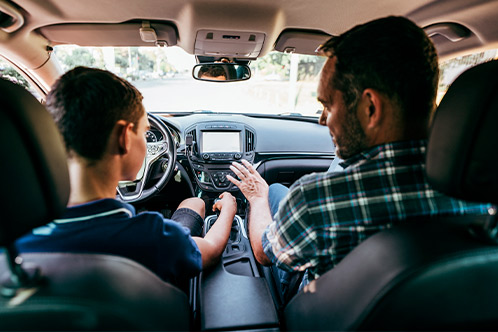
A man and a boy inside a car, focused on mastering the Texas driving test requirements.

Before you can take your Texas driving test, you’ll need to meet several requirements based on your age and experience level. Understanding these prerequisites will help ensure a smooth process when you’re ready to get behind the wheel.

  • Age Requirements

    • Must be at least 16 years old to take the driving test
    • Teens (14-17): Eligible for a learner’s permit at 15, provisional license at 16
    • Adults (18-24): Different requirements than teens
    • Adults (25+): Simplified process with fewer requirements
  • Required Documentation

  • Driver Education Requirements

  • Application Process and Fees

    • Submit all required certificates and documentation to DPS
    • Take a vision test
    • Pay the applicable fees (varies by age and license type)
    • Certificate delivery typically takes 1-2 hours after course completion
  • Scheduling Your Driving Test

    • Options include Texas DPS offices (potentially long wait times of 60+ days)
    • Third Party Skills Testing (TPST) locations (typically shorter wait times)
    • Ensure your vehicle is in optimal condition for the test day inspection
    • Check the back of your driving permit to confirm the eligibility date

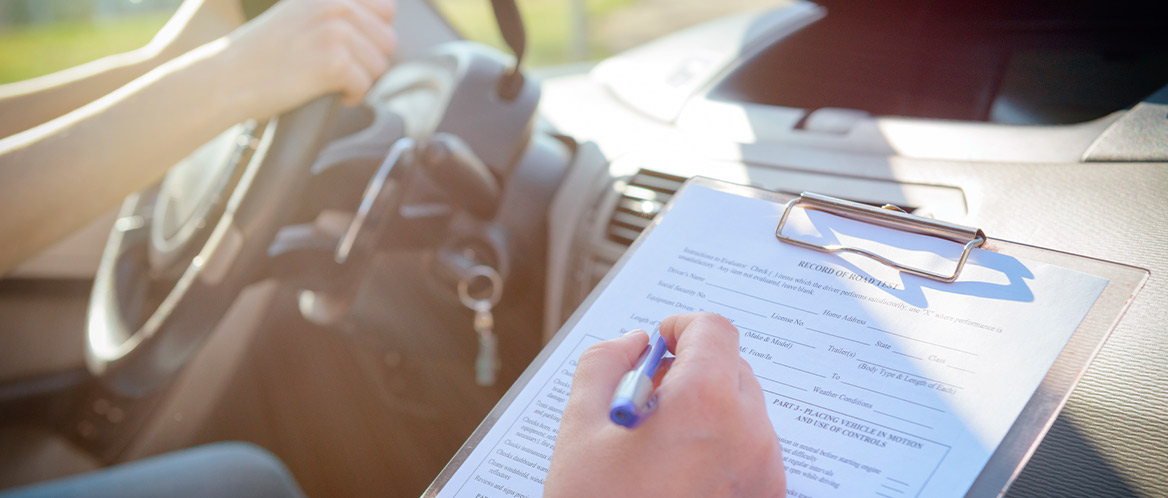
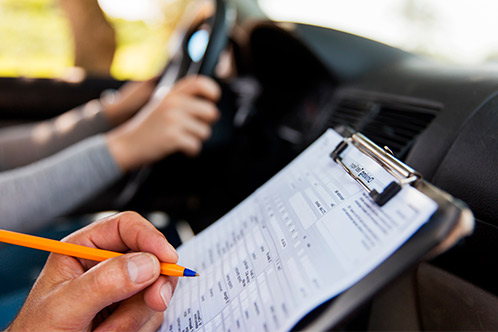
A driver writes on a clipboard, illustrating the dangers of distracted driving in relation to the Texas driving test.How Many Mistakes Are Allowed on the Texas Driving Test?
The Texas driving test scoring system is a helpful tool for reducing anxiety and increasing your likelihood of success. Here’s what you need to know about the allowed mistakes and how you’re evaluated:

  • Scoring System: The Texas driving test uses a percentage-based scoring system. To pass, you must score at least 90% on your road test. This means you have a small margin for error, but perfection isn’t required.
  • Allowed Mistakes: You may still pass the exam if you make one or two minor errors, provided they are not categorized as harmful or illegal actions. The examiner has discretion in how they weight different types of mistakes.
  • Types of Minor Mistakes: Minor mistakes typically include small technical errors that don’t create unsafe conditions. These are weighted less heavily than critical errors.
  • Common Acceptable Errors: Some examples of minor mistakes that won’t automatically fail you include:
    • Slightly jerky or hesitant acceleration
    • Taking too long at a stop sign (being overly cautious)
    • Minor positioning errors when turning
    • Slight uncertainty when checking mirrors
    • Occasionally forgetting to exaggerate mirror checks

Remember that while these minor mistakes won’t automatically fail you, accumulating too many can still push your score below the required 90% threshold. The key is to practice thoroughly before your test day and focus on maintaining safe, confident driving practices throughout your examination.

 What Fails You on the Texas Driving Test: Major Mistakes to Avoid

While minor errors may be forgiven during your driving test, certain critical mistakes will result in an automatic failure. To avoid common pitfalls and focus on safe driving practices, clarify and understand these “dealbreakers” to help you pass the driving test..

  • Traffic Violations Resulting in Automatic Failure:

    • Failing to fasten your seatbelt before putting the car in motion
    • Making rolling or incomplete stops at stop signs
    • Exceeding the posted speed limit
    • Running red lights or failing to yield to pedestrians
    • Improper lane changes without signaling or checking blind spots
    • Following too closely behind other vehicles
    • Confusion at four-way stops that disrupts traffic flow
  • Vehicle Control and Safety Issues:

    • Lack of vehicle control requiring examiner intervention
    • Applying excessive brake pressure (harsh, rough braking)
    • Driving too slowly and impeding traffic flow
    • Failure to check mirrors regularly (every 5-10 seconds)
    • Inability to successfully complete required maneuvers like parallel parking (in Texas, this is a must-pass element)
  • Vehicle and Documentation Problems:

    • Using a vehicle with mechanical issues (non-functioning lights, horn, signals, etc.)
    • Expired vehicle registration or inspection
    • Missing or invalid insurance documentation
    • Arriving without required certificates (driver education, Impact Texas Drivers program)

Tips to Avoid Major Mistakes:

Avoiding major mistakes on your Texas driving test starts with smart preparation and attention to detail.

  • Practice extensively in various conditions and environments
  • Take a refresher lesson before your test date
  • Perform a vehicle inspection the day before your test
  • Create a checklist of all required documents
  • Arrive early to reduce test-day anxiety
  • Exaggerate your mirror checks so the examiner sees you performing them

If You Fail Your Test:

If you don’t pass your Texas driving test, taking the right steps afterward can help you come back stronger and more prepared for your next attempt.

Remember that examiners are looking for safe, confident driving habits that demonstrate your ability to handle real-world driving situations. By avoiding major mistakes and following proper driving procedures, you’ll be well on your way to passing your Texas driving test and earning your license.

Ace your driving test with the help of Driving Quest. At Driving Quest, we provide all the resources you need to succeed. Whether you’re a teen or an adult, our comprehensive courses cover everything from common test mistakes to essential driving skills. Prevent what might cause you to fail, ensuring you’re fully prepared on test day. Enroll in our state-approved online driver’s ed courses today and take the fast track to your Texas driver’s license. Start your journey with confidence!

Stay Ahead of the Curve: Your Complete Guide to Texas Road Conditions and Safety

A joyful man and woman share a laugh in a car, capturing a fun moment on their journey.

With over 680,000 lane miles, Texas boasts the largest roadway network in the United States, spanning coastlines, deserts, plains, and major urban centers. But this impressive network comes with considerable risks. The state consistently reports over 3,000 traffic fatalities annually, making awareness of road conditions not only helpful but often life-saving.

Texas’s diverse geography brings dramatic weather fluctuations. Sudden floods, hailstorms (over 450 major events in 2023), triple-digit heat waves, and winter ice all contribute to unpredictable road hazards. Combine this with congested highways and ongoing construction, and the road to safety starts long before you turn the ignition.

Real-time digital tools like DriveTexas and proactive planning give drivers the power to avoid delays, detours, and disasters.

Understanding Texas Road Conditions: Key Influences and Information Sources

A vehicle on a road releases smoke from the back, emphasizing the importance of staying informed about Texas road safety.

It is important to understand what factors most impact Texas roads, to stay informed and where you can turn for real-time information.

Primary Factors Impacting Texas Roads

Each factor below can rapidly alter driving conditions, making awareness a vital part of trip planning:

  • Unpredictable Weather: Texas’s geography contributes to everything from localized flash floods to widespread winter storms.
  • Frequent Construction: Expanding cities and highways mean there’s almost always a work zone somewhere in the state.
  • Traffic Volume and Accidents: High population centers like Houston, Dallas, and Austin routinely experience traffic delays and collisions.

Common Road Condition Challenges in Texas

To better understand the risks Texas drivers face, it helps to break down the most common road condition challenges. These hazards can emerge suddenly and vary by season and region. The table below outlines key dangers and how they typically impact drivers across the state. 

Hazard Type Risk Description
Flash Floods Can occur within minutes, sweep cars away, often not visible at low spots
Hailstorms Damages vehicles, reduces visibility; over 450 major events in 2023
Extreme Heat Can cause tire blowouts and engine overheating
Ice on Bridges Bridges and overpasses freeze faster than roadways
Work Zone Confusion Shifting lanes, unclear signage, and sudden slowdowns

Reliable Resources for Road Conditions

Texas drivers have several excellent sources to consult before and during travel. It is advisable to always check at least two sources before long trips, weather and traffic together give the clearest picture. Sources to consult include:

  • DriveTexas: Interactive maps with road closures, weather hazards, and construction alerts
  • TxDOT Hotline: 800-452-9292 for current road condition updates
  • TxDOT Social Media: Follow regional accounts for immediate incident reports
  • Local News Apps: Keep tabs on community-level weather and traffic alerts

Staying Safe on Texas Roads: Tips for Navigating Common Hazards

Aerial view of a rural Texas area featuring a highway and a winding road, highlighting road conditions and safety.

Now that you’re informed, the next step is implementing specific strategies for staying safe. Defensive driving and preparation go hand-in-hand with awareness.

General Safety Tips by Condition

1. Flooded Roads

2. Winter and Ice

3. Construction Zones

4. Heavy Traffic

Safety Equipment Essentials for Texas Drivers

Preparation extends to your vehicle as well. Regular vehicle maintenance is also key, check tire pressure, battery health, and fluid levels monthly. Here’s what every Texas driver should keep in the car, especially during long trips or seasonal extremes:

Emergency Kit Items Purpose
Flashlight For visibility in night-time breakdowns
Jumper Cables For dead batteries, common during extreme heat or cold
Blanket or Emergency Mylar Provides warmth if stranded in winter
Water (1 gallon/person) Prevents dehydration, especially in summer heat
Tire Pressure Gauge Helps prevent blowouts in extreme temperatures
First Aid Kit For minor injuries in remote areas
Multi-tool Useful in various emergencies

Planning Ahead: Travel Strategies to Minimize Risk

A vehicle showing a fire extinguisher, tools, and an accident warning sign, highlighting Texas road safety essentials.

In Texas, road safety isn’t just about reacting in the moment. It’s about planning before you hit the road. If road or weather conditions look hazardous, consider rescheduling non-essential trips.

Trip Planning Best Practices

  • Check Conditions in Advance: Use DriveTexas and weather apps for your route.
  • Avoid Rush Hours: Plan to pass through major metro areas during off-peak times.
  • Leave Extra Time: Add 15–30 minutes to your estimated arrival to account for detours or slowdowns.
  • Create a Backup Route: Know a secondary path in case of closures.

Texas-Specific Driving Considerations

Driving in Texas is different from other states due to its sheer size and variable terrain. Make it a habit to talk with passengers about road conditions before departure, especially teens or new drivers. Here’s what to keep in mind:

Region Unique Driving Challenges
Central Texas Flash floods, especially in Hill Country
Gulf Coast Hurricane evacuation routes and tropical storms
West Texas Long stretches between gas stations, limited cell reception
North Texas Ice storms and black ice on overpasses
Metro Areas (e.g., Houston, Austin) High-volume traffic, frequent construction

Promoting a Culture of Safety at Home and On the Road

Safety doesn’t stop with you. Texas drivers can promote safer roads by setting a good example and educating family and friends. A little preparation and awareness goes a long way in reducing the risk for everyone on Texas roads.

Ways to Promote Road Safety

  • Review route plans as a family before road trips
  • Share DriveTexas and weather app tools with new or young drivers
  • Keep your emergency kit updated and visible to remind others
  • Avoid risky behaviors like speeding, texting, or tailgating.

Empower Your Drive with Education

 A family relaxes in the trunk of their car by the water, enjoying a sunny day and the beauty of the outdoors.

Knowledge is your greatest asset when navigating Texas’s complex and often dangerous roads. From flash floods to freeway backups, your ability to plan, prepare, and respond can mean the difference between arriving safely or becoming a statistic. But this kind of road readiness doesn’t happen by chance. It starts with the right education.

The Advantage of Being a Well-Trained Driver in Texas

Texas is unlike any other state when it comes to driving challenges. With its massive road network, varied climate, and high traffic volume, drivers must be equipped with more than just the basics. Proper education can fill critical gaps in awareness, especially for adults who may not have had formal instruction, drivers new to Texas laws and conditions, or newly licensed teen drivers.

Take Control of Your Driving Journey

Driving Quest offers more than just a path to your driver’s license. It offers confidence, safety, and real-world skills. Their Texas Adult Driver’s Ed course is:

  • State-approved and meets DPS requirements for ages 18+
  • 100% online and self-paced, allowing you to learn at your convenience
  • Comprehensive, covering Texas traffic laws, defensive driving techniques, emergency preparedness, and hazard recognition
  • Designed to build confidence, whether you’re a first-time driver or returning to the road after a break

You’ll not only pass the DPS exam, but you’ll also gain practical insights that help you stay safe on Texas roads for years to come. Take the first step toward becoming a safer, smarter driver. Enroll today with Driving Quest and drive with confidence, no matter what Texas roads throw your way.

Navigating Texas License Requirements in 2025

On a wooden table, toy cars and traffic signs are arranged alongside a notebook about Texas license requirements in 2025.

What Changed in Texas Driver Permit Rules for 2025

An individual is writing on a clipboard in a moving car, highlighting issues related to Texas driver permit rules set for 2025.Texas is rolling out important updates in 2025 that affect how permits and licenses are issued, renewed, and verified. These changes apply to teens, first-time drivers, and adults renewing their licenses. Below are the key updates.

TxT Platform Now Required for All Services

As of June 1, 2025, all Texas driver license services, including renewals, replacements, and address updates, must be completed through the TxT platform (Texas by Texas). The older online renewal system is now discontinued.

Why it matters:
Every applicant must set up a TxT account using personal identifiers such as email, phone number, SSN, and their current Texas ID or license number.

Vision Test Required at DPS Appointments

Texas law requires applicants to pass a vision test during in-person visits. You must have at least 20/40 vision in both eyes, with or without corrective lenses. If you fail the screening, you may be required to provide documentation from a licensed vision specialist.

Why it matters:
Anyone applying for a permit, license renewal, or road test in person must meet this standard.

Digital Document Submissions Streamlined

Texas DPS is expanding digital document acceptance through TxT. New drivers can now upload required forms (like the DE-964 certificate, proof of residency, and VOE forms) directly through the portal.

Why it matters:
You may not need to bring hard copies of all documents to your appointment, saving time and reducing the chance of missing paperwork.

Permit Expirations

Learner permits are valid for a limited period and must be renewed on time. If a permit expires, the applicant may need to restart the entire process, including retaking the written test and restarting the 6-month holding period.

Why it matters:
Failing to act before expiration could result in delays and additional fees.

End of Vehicle Safety Inspections for Most Drivers

A man and woman in the driver's seat of a car, engaged in conversation about upcoming Texas driver permit rulesStarting January 1, 2025, Texas will no longer require annual safety inspections for non-commercial vehicles in most counties. However, emissions testing will still apply in counties like Harris, Dallas, and Travis.

Why it matters:
New drivers purchasing a vehicle for practice or testing will no longer need to worry about a safety inspection, but they should still confirm if emissions testing applies.

REAL ID Compliance Deadline: May 7, 2025

Beginning May 7, 2025, Texas residents must now carry a REAL ID-compliant license or ID card (with a gold star in the top right corner) to:

  • Board domestic flights
  • Enter federal buildings
  • Access military bases

To obtain one, applicants must provide a birth certificate or passport, a Social Security card, and two documents showing Texas residency.

Elimination of Paper License Tags

Texas will eliminate temporary paper license plates starting July 1, 2025, under House Bill 718. Dealers will now issue permanent metal plates at the time of purchase.

Why it matters:
First-time drivers purchasing a vehicle must ensure it’s registered and tagged correctly before using it for the road test.

Understanding the Texas Graduated Driver License (GDL) System

Texas uses a two-phase GDL system designed to help teen drivers build experience gradually and safely.

GDL Phases Overview

Phase Age Range Key Requirements Restrictions
Learner’s Permit 15–16 6 hours of driver education, DE-964 certificate, VOE form Must drive with a licensed adult (21+), held for 6 months
Provisional 16–17 44 driving hours, driving test, ITTD certificate No driving 12–5 AM, 1 passenger under 21, no phone use

To transition from a learner’s permit to a provisional license, teens must meet all education, documentation, and practice requirements.

Required Documents for Teen Drivers

A person writes answers on a test paper, focusing on the new Texas driver permit rules for 2025.When applying for a Texas learner’s permit or moving to the next stage, teens must bring:

  • DE-964 Certificate (proof of driver education completion)
  • Verification of Enrollment (VOE) from school
  • Parent or Guardian Signature
  • Proof of Identity and Texas Residency
  • Social Security Card or Proof of SSN

There are also restrictions on driving during nighttime hours and on carrying passengers aim to reduce accident risk during early driving experience

To apply for a provisional license, the learner’s permit must have been held for at least 6 months without major violations.

Adult Driver’s Permit Path (Ages 18–24)

Adults between 18 and 24 must complete a 6-hour adult driver education course and the Impact Texas Adult Drivers (ITAD) program before taking the driving test.

Age Group Driver Ed Required Written Test Driving Test ITAD Required
18–24 Yes Yes Yes Yes
25+ Optional Yes Yes Yes

Even for adults, the first license begins with a learner’s permit phase, especially if you need time to practice before testing.

Driver Education That Keeps Up With the Rules

Driving Quest offers online courses that meet Texas DPS requirements and are built to help new drivers confidently navigate every step of the permit and licensing process. Our curriculum is structured to prepare you for both the written test and the real-world expectations of the driving exam.

Whether you’re a teen who is just beginning driver education or an adult seeking a flexible learning format, our platform includes video instruction, interactive quizzes, and progress tracking you can access anytime. Start early. Study smart. And get on the road faster.